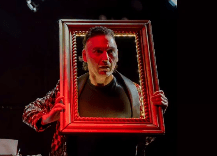
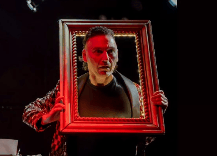
Even though My Ghosts was presented as a full production at the ManiFestival, this review will be a hybrid of a review of a reading and production since the show is still in search of a producer who can get it to a full off-Broadway production.
The show is much, much better than it was at the 2025 Open Jar Reading. It has an improved book, quality and intelligent casting and director in Rebecca Frazier who brought exceptional skills, not only in direction, but also in choreography, costumes, lighting and set design to this three-show production.
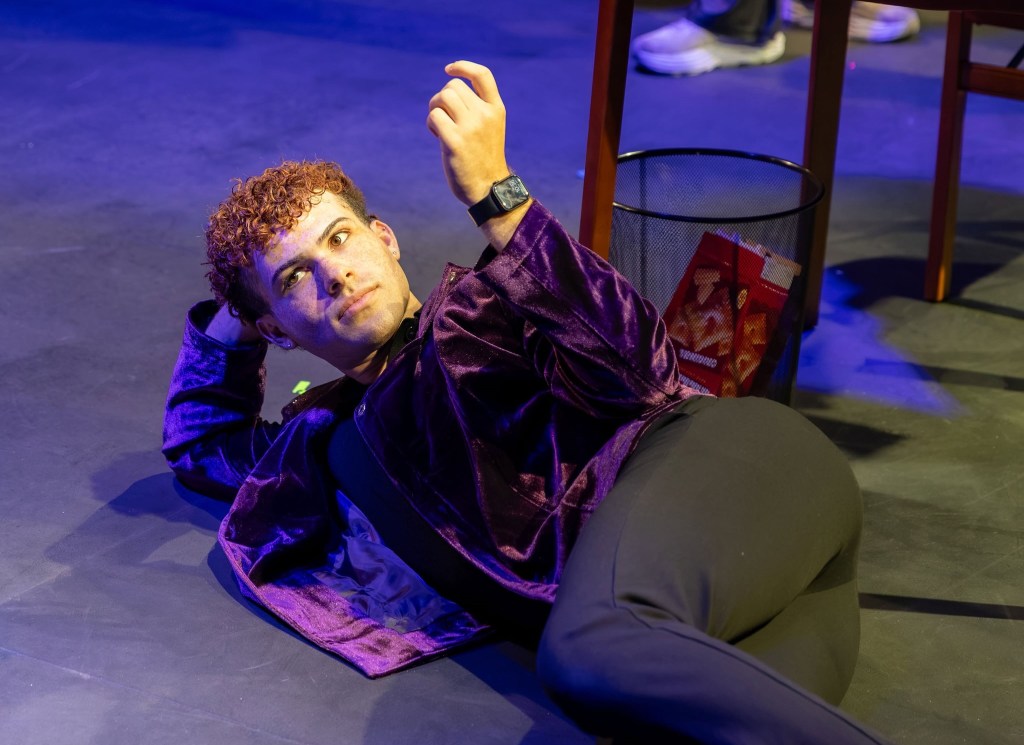
The most important improvement was the complete rewriting of the character of Jack Wilson, here played wonderfully by Justin Anthony. In the original reading Wilson was portrayed as a major musical contributor and probable gay lover of Shakespeare. Since Wilson only joined the troupe in 1610, at the end of Shakespeare’s career, and was very young, the portrayal made no sense. Now he is portrayed as a young man who challenged Shakespeare and tried to “improve” his work. This change alone moves My Ghosts to a different plane.
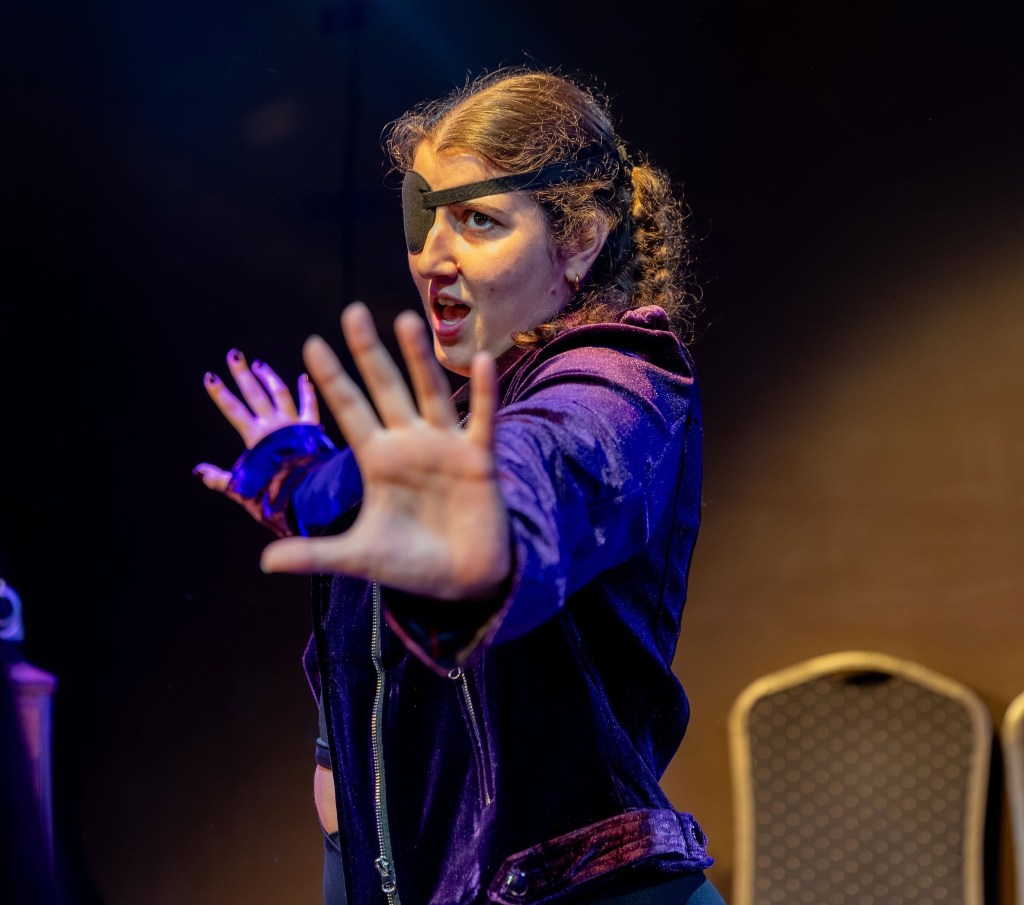
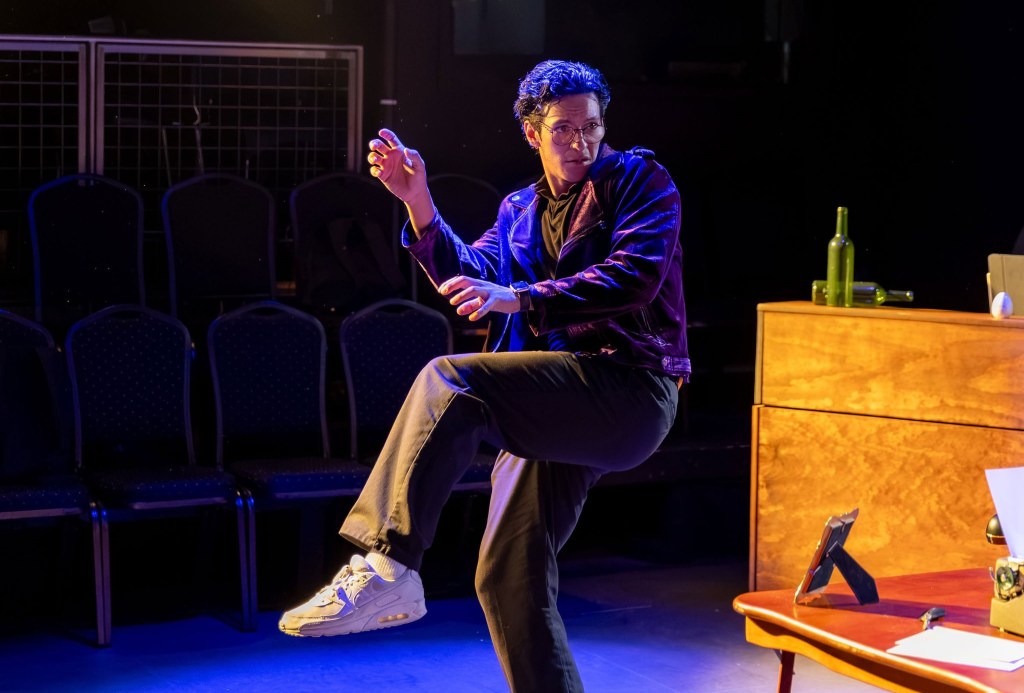
But there are other very important changes that Frazier and the Laros’ have introduced. The atmosphere of My Ghosts now embraces the comedy. That is essential for any work using the idea of Shakespeare as a plot device. All of Shakespeare’s works are comedies and that must be reflected in works purporting to be about how Shakespeare is perceived. Shakespeare (Mundo Ballejos), Marlowe (Jessie Grimaldo) and Wilson are now portrayed as a “gang” conspiring to upset and drive biographer/protagonist Cab Curio (David Laros) to work harder on completing the “greatest book every written” – the biography of Shakespeare. Marlowe and Wilson are also driven to make sure that they receive major credit for Shakespeare’s success. Appropriately, Frazier has the ghostly trio dressed as gang members.
Another improvement is the two female cast members are no longer pure sopranos. Both Grimaldo and Jillian Soares as Curio’s mother, Lenore, mostly sing as mezzo sopranos with occasional forays into purely soprano voice. That means the two female supporting actors are no longer competing for “top” voice which creates a better, less confusing listening experience.
But My Ghosts still has spots that need improvement. The opening number is now a “hook” which fills a sorely missing need in the earlier reading, but it could be improved to be even more demanding of audience attention.
When Curio takes over the piano from the show accompanist, he is fulling a lifelong dream. The song he currently plays shows off his classical skills and love of traditional music. But this scene needs to be a moment of celebration. The song he plays and sings must make the audience a part of his rediscovered joy. The song therefore needs to be modern and upbeat. Laros must get rid of the darkness.
One of the early premises introduced in My Ghosts is that the reason for Curio’s depression and writer’s block is the death of his father four months before the play’s opening scene. That part is fine, but Lenore as his mother and muse is more than a bit cringeworthy with all the Oedipal implications. The show would be far more poignant if Lenore was Curio’s dead wife, rather than his dead mother. Having a muse who came into his life and served as inspiration and confidence for his previous successes and breaking away from his father’s control provides a more palatable situation for an audience than a push/pull relationship between a demanding father and a loving mother, both dead. Especially when the motherly relationship has sexual undertones.
My Ghosts is close to being ready for a full production that should be attractive to off-Broadway producers and a broad audience. It’s relatively small cast, simple set and only needing a pianist/keyboardist makes it a relatively cheap musical to produce. It’s potential for universal appeal with a mix of comedy and a potential love story could give it a powerful engine.

