
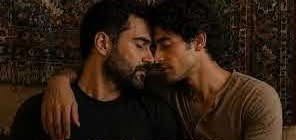
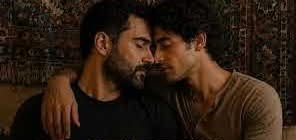
Barry M. Putt, Jr’s Omeed’s Tapestries is a much tighter play now than it was at its November 2024 reading and as a result proreviewsions to put it back on Putt’s original track.
The discrimination and legal consequences that Omeed (Kamran Taherpour) and Afshar (Amuri Nabeel) face in Iran for being gay in a country run by religious zealots is real and needs exposure. But, perhaps more importantly, Omeed’s Tapestries now also exposes the increasing danger for members of the LBGTQIA+ community in the United States as religious zealots are emboldened by the rhetoric and actions of the current administration.
Where Omeed’s Tapestries has most changed for the better is that Afshar and Omeed are less oblivious of the dangers they face as gay men living in Iran than they were in the previous text. This gives them the opportunity to be the protagonists that Putt’s imagined them to be. What has been largely lost is that Afshar is punished more harshly than Omeed because his photography of the poor and desperate is a far greater threat to the regime than homosexuality.
But the problem that Putt has introduced for himself is that the show is no longer Omeed’s Tapestries. It is now Mahasti’s (Defne Ozhan) Flowering. The LBGTQIA+ themes are now more an important subplot than the primary plot. Mahasti’s feminism and brave assertion of herself into a misogynistic society, especially as the daughter of the show’s misogynistic and homophobic antagonist, Farbad (Umer Farooq), is the far more interesting and audience motivating story. Mahasti is in her late teens or early 20s and insisting on completing her education and refusing to marry the cousin her father has chosen for her. More importantly, she takes actions that will put her in the sights of the religious police. She attends Omeed’s birthday party knowing that Omeed will be unable to resist showing affection to Afshar which will put everyone there into danger. When Omeed and Afshar are arrested, she arranges for Omeed’s bail and gets a lawyer for Afshar. She becomes part of Omeed’s escape from Iran after Afshar’s execution. Unlike Omeed and Afshar who are basically static characters, Mahasti grows throughout the play and is the most compelling character that Putt puts on stage. Now Putt needs to either fully embrace Mahasti as his protagonist (probably the best idea since her emergence was organic) or pull back from her and find a way to make Omeed grow.
Director Robert Liebowitz makes some solid decisions. The best of these is leaving the three scenes on stage when only one of the scenes is active. It serves as a reminder that the world is moving and not just the scene where interaction is taking place. Where he fell short was in getting his actors to project. They seemed to act as if either they were being amplified or the relatively small Sargent space did not demand projection. Neither of those things were true and the failure to project made it more difficult to follow this show with its very clear writing.

