
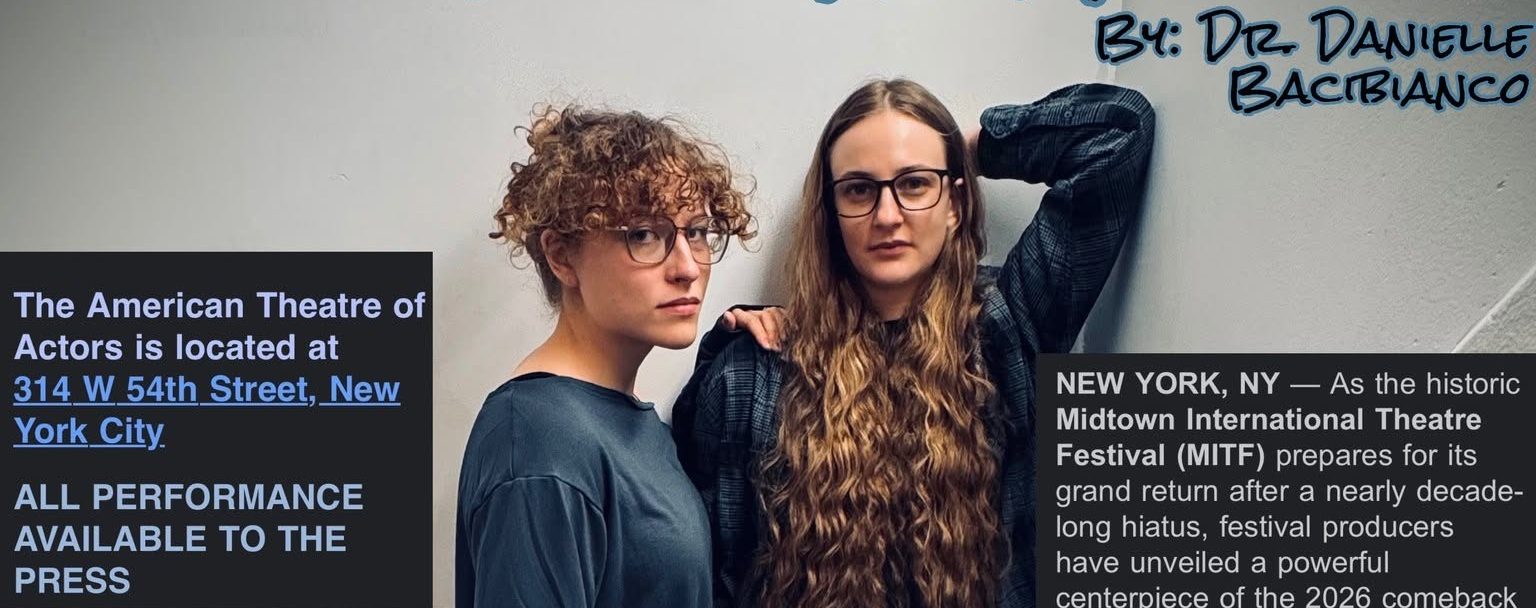
Danielle Bacibianco’s The Plans We Made is a piece that has some very strong elements and some that leave the audience wanting better. She has set up the difficult task for herself by writing a play which is very similar to but not as brilliant as Philip Ridley’s 2011 Tender Napalm which explores a toxic relationship with both choreography and language but without the added burden of alcoholism/drug abuse.
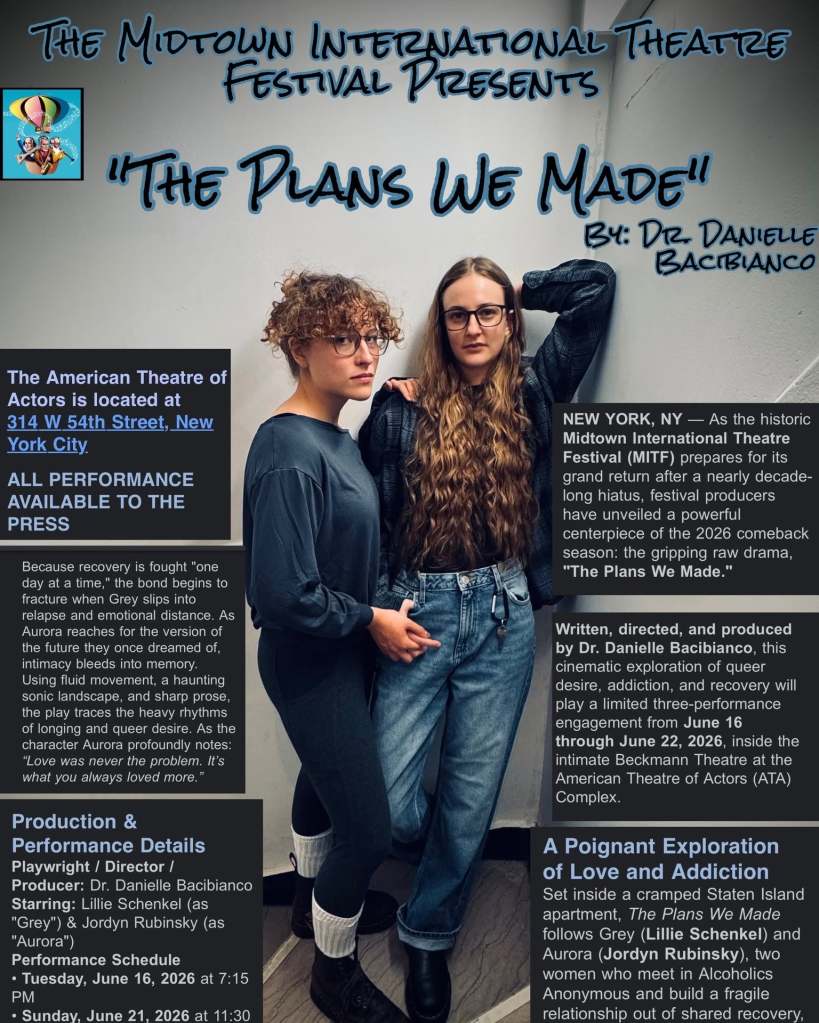
Surprisingly, Bacibianco’s work is strongest when it is silent. There doesn’t seem to be anything in her resume which would indicate that she would be an extraordinary choreographer, but the choreography in Plans effectively communicates the emotional roller coaster that her “Grey” (Lillie Schenkel) and “Aurora” (Jordyn Rubinsky) take their journey on. The show is immensely helped by Rubinsky’s understanding of movement. That is also something of a surprise since her resume indicates very little serious dance training or experience. Done as a silent play, The Plans We Made would wrench emotion from the audience.
Also a surprise, since Bacibianco has a PhD in English, is how pedestrian the dialogue in The Plan is. Where Tender Napalm weds beautiful poetic, albeit violent, language to its amazing choreography, The Plan’s dialogue makes no attempt to put the romance and conflict of the choreography into the mouths of its two protagonists. The language is incredibly vernacular. In most works this would be good, but not in a play where the characters are driven by emotion over rationality.
The other mistake that Bacihianco makes is allowing an irrational “happy” ending which seemingly conflicts with the personality traits of her characters as she introduced them to the audience. Aurora is introduced as the alcoholic going to her first AA meeting. She is unsure if she belongs there or wants to stay. Her career as a dancer, announces that her economic security is nonexistent even if she is extremely successful (an unlikely result for a stoned dancer). Grey, although an author, is also an employee of a college. She has been sober for an extended period of time, has a stable economic life, and has the confidence to introduce herself to the newbie, Aurora, and implore/manipulate her to stay. It is Grey, even after she loses her sobriety, that is the dominant personality in the relationship. In reality, that probably means that she will drag Aurora with her into her decline and, in the unlikely case that Aurora survives that assault on her sobriety, it is even less likely that Aurora’s sobriety, and even her life, will survive Grey’s suicide. Aurora surviving and thriving, as Bacibianco implies, is a very unlikely outcome and ignores the toxicity that dominated this “affair of the heart”.
The Plan We Made has potential, but it seems to have been written within a year, which helps explain why this production seems premature.

