
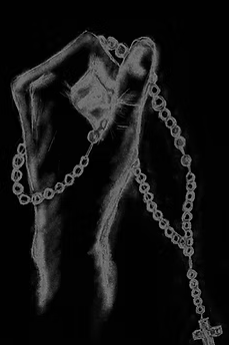
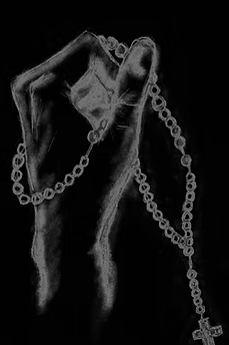
The Rosary Through Which We Talk to the God We (Don’t) Share occupies a unique place on the genre of “lapsed” Catholic plays. Most lapsed Catholitc plays involve an author/protagonist who has left the Church but has been unable to become comfortable with their position. Those plays very seldom work. Alejandra Cepeda Batiz has provided us with a story where the protagonist has ostensively remained within the Church while being uncomfortable with it and being rejected by it. Thus, the show relates how “we talk to the God we (don’t) Share”. The four characters all have very different visions and experiences with God. Batiz intelligently borrows from the examples set by 17th century philosophers, like Descartes, who beginning their treatises by praising the Church and then deconstruct it. Batiz’s approach works exceptionally well. Her deconstruction is very subtle, but devastating (if you pay attention).
The show in the Manifestival is also blessed by an exceptional cast and excellent direction. That team works so well together that they cover what mistakes there are in Bastiz’s writing. That is something that happens often in musicals and seldom in plays. Bastiz does tend to become a bit repetitive after establishing her point, but not so much so that the audience cringes. Most of the audience will fail to notice Bastiz’s few mistakes.
The cast is led by the wonderful performance of Bethsabé Caballero as Victoria who plays the granddaughter who goes to Church with her true believer grandmother (Britni Camacho) almost every Sunday and is taught (almost) how to pray the Rosary. Cacmacho’s performance and beliefs are balanced by the beliefs of her “husband” (Aarón Mendoza). Menoza plays the Atheist in the family. Batiz lets us see that the only one in the family not feeling any conflict over religion is Victoria’s grandfather. He is fully secure in his atheism. But Victoria is not as secure she wants to be about her Catholicism. She recognizes that the secret she keeps from her grandmother – that she is bi or gay – forces her to know that the Church and her grandmother will probably reject her, despite her desire to be part of the Church.
Even Victoria’s grandmother faces rejection by the Church when she arranges a High Mass for her husband in an effort to have him accepted by God so she can be with him when she dies. But the Priest, rather than forgive her husband’s “sins”, launches into an attack on non-believers. Her hopes for a blissful eternity are dashed. Batiz makes us aware that the Church is, and always will be, a powerful institution that puts its own interests first.
The Rosary Through Which We Talk to the God We (Don’t) Share is play any serious theater goer should run to see.

