
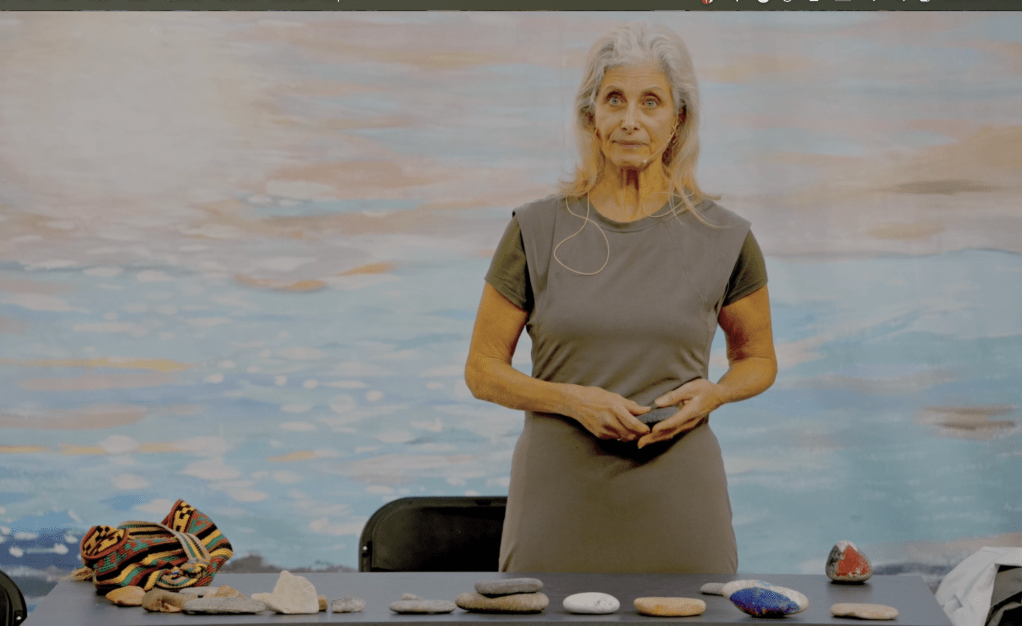
Sandra Laub’s one-woman, 21-character show is a very important, brave, and necessary theater piece. Unfortunately, it is not great as a theater piece. It has the same problem of many shows of this type in that the writer has come to a conclusion that opposes who they identify as, and they have written the play before they have resolved their personal dilemma.
In Laub’s case her identity as a humanitarian and intellectual is in conflict with the identity as a Zionist she grew up with. Her research, which is fairly extensive in the period from 1946 forward, tells her that Zionism, at least in that period, has always had as its goal the extermination of the Palestinian peoples. From her experience playing Golda, she includes Meir’s statement at the end of the Eichmann trial that now “we have the right to do whatever we want”. That statement has guided Israeli policy ever since.
But that policy is in conflict with her identity as a woman and a humanitarian. She also believes that all people have a right to live and have a place to live. She laments that Palestinians were not allowed to move back to their homes after the 1948 war. She is appalled by the actions of the Israeli Defense Forces and settlers who indiscriminately kill, harass, and evict Palestinians from their homes with excuses of self-preservation. She recognizes that ultimately these actions are going to be self-destructive and eliminate international support for Israeli and (mistakenly) fan the flames of an antisemitism that has always been smoldering
Perhaps she could resolve part of her personal dilemma by beginning her research in the late 19th and early 20th century when virtually all religious Jews rejected Theodor Herzl’s Zionist vision. The most religious saw it as a rejection of God’s will and less religious as interference with their goal of acceptance by the majority populations since it emphasized distinctiveness over similarity. Looking for the resolution of her personal conflict inside the Jewish community might allow her to be at peace with a conclusion.
Without that resolution Laub’s work will never be great theater. Great theater needs to commit. An author needs to go where their characters take them, even if it is not personally comfortable. From a theatrical perspective it doesn’t matter where she lands. Either conclusion will be controversial. But an author has a responsibility in great theater to define the debate.

