

article by Jake Mendel
In the landscape of New York’s Off-Off-Broadway scene—a territory often described as the “Wild West” of contemporary theater—actor Rommell Sermons has carved out a reputation as a performer of profound gravity and purpose. His upcoming work in two significant productions at the American Theatre of Actors (ATA), The Lewis & Clark Expedition: The Story of York and Home Is Sweet Sorrow, highlights a career dedicated to the “presence and purpose” of Black narratives.

Sermons’ approach to his craft is not merely about performance; it is an act of restoration. By aligning himself with playwrights who challenge the traditional American canon, Sermons is helping to build new rooms for stories that were never designed to be told in conventional spaces.
Reclaiming the “Bear God”: The Story of York
In Kenthedo Robinson’s The Story of York, Sermons engages with one of the most glaring omissions in the American frontier narrative. While Meriwether Lewis and William Clark are household names, York—the enslaved man whose survival skills and physical prowess were indispensable to the Corps of Discovery—was nearly erased from history.
The Paradox of Agency
The play explores the agonizing duality of York’s existence. During the expedition (1804–1806), York was revered by various Native American nations, many of whom had never seen a person of African descent. To them, he was a figure of mythic proportions—the “Bear God.” Yet, as Sermons notes, the tragedy lies in the return: a man who was a deity in the wilderness remained legally bound as property in the eyes of the United States.
Sermons describes his responsibility in this role as a duty to “honor the humanity” of the man.
“York isn’t just a symbol—he was a man,” Sermons explains. “My job is to… not reduce him to an idea.”
A Global Context
Under Robinson’s direction, the play elevates York’s story from a mere biography to a global political drama. It connects the expedition to the Haitian Revolution, noting how Napoleon’s defeat by Toussaint Louverture’s forces led to the Louisiana Purchase. Sermons’ performance sits at the center of this “fear and possibility,” portraying a man navigating the birth of a nation that refused to acknowledge his personhood.


Expanding the Narrative: Home Is Sweet Sorrow
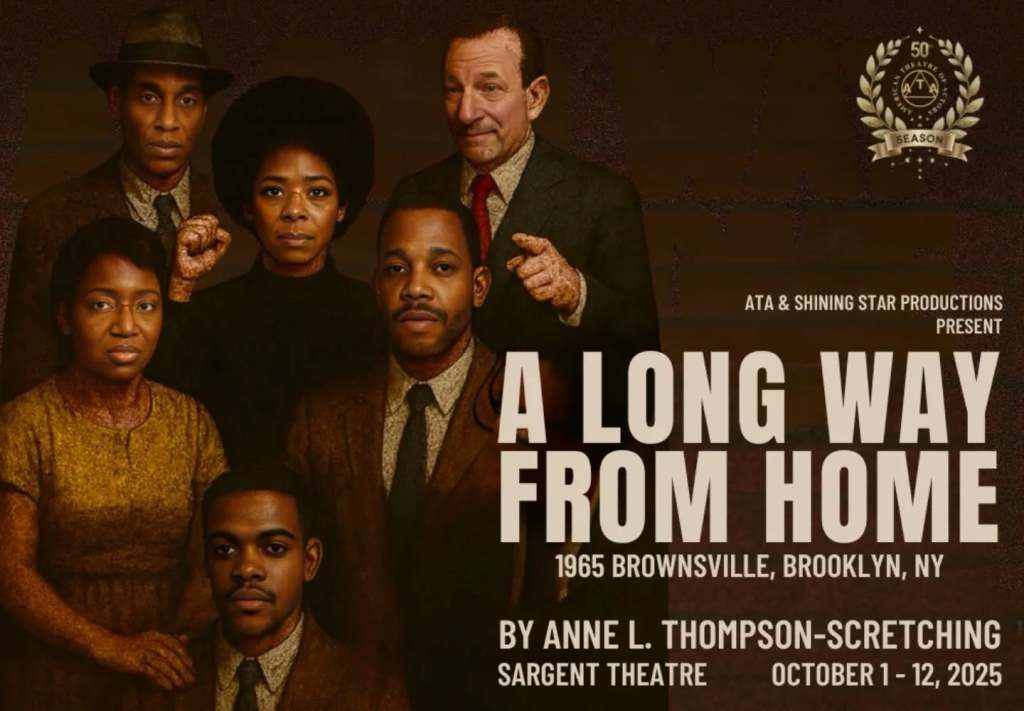
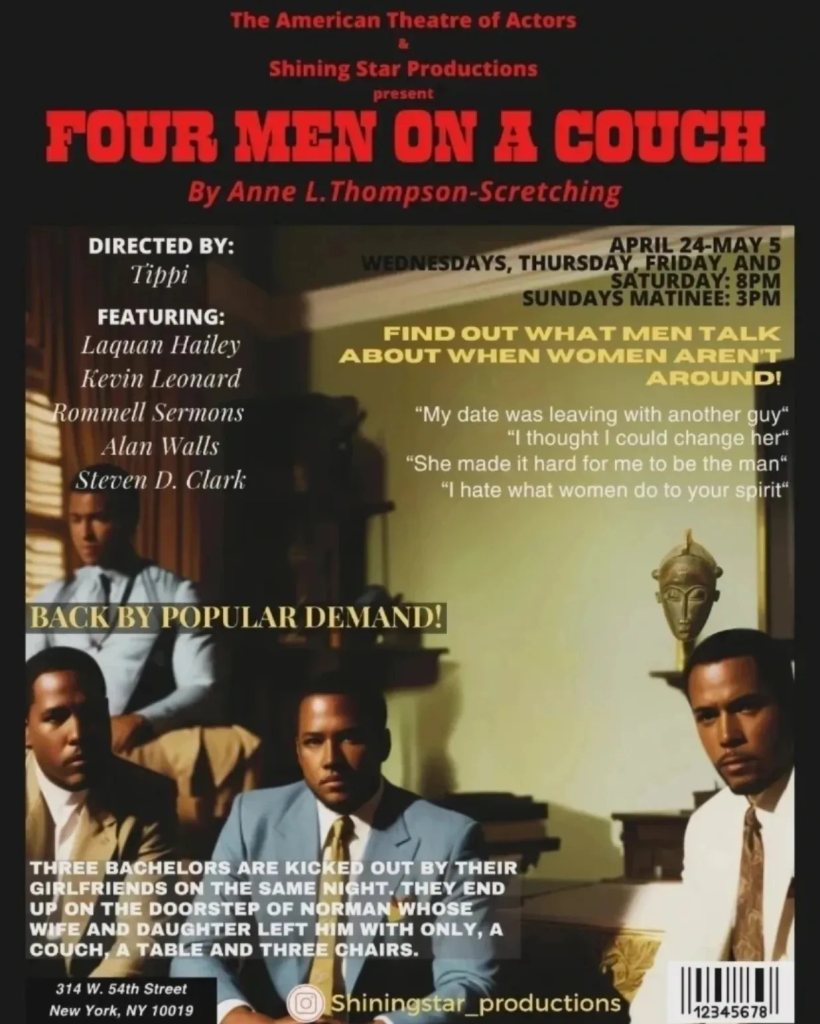
Following the run of York, Sermons will transition immediately into Anne L. Thompson-Scretching’s Home Is Sweet Sorrow (running March 11–29). Thompson-Scretching, an acclaimed playwright known for her uncompromising insistence on truth and memory, represents the type of “obscure or new voice” that Sermons intentionally seeks out.
While York deals with the foundational myths of America, Thompson-Scretching’s work often delves into the contemporary and domestic complexities of the Black experience. For Sermons, moving between these two works is a testament to his versatility and his commitment to the American Theatre of Actors as a hub for Black intellectual and artistic rigor.
The DIY Philosophy: Freedom Over Safety
Sermons is vocal about the challenges of the indie theater circuit. He acknowledges that Off-Off-Broadway lacks a “safety net,” requiring actors to wear multiple hats and work with limited resources. However, he views this lack of institutional oversight as a vital freedom.
- Authenticity through Collaboration: Sermons emphasizes that the indie circuit allows for a “seat at the table” during the development process.
- The Power of ‘No’: He advises young actors to use the indie stage as a “laboratory” to find their voice and to prioritize their spirit over mere applause.
- A Call for Equity: Despite his love for the DIY world, Sermons remains a pragmatist regarding systemic change. He argues that “passion can’t be the only currency,” calling for material equity for artists of color who are often asked to give the most for the least.
A Legacy of Resistance
Inspired by trailblazers like Paul Robeson, Amiri Baraka, and Woodie King Jr., Rommell Sermons views his roles as part of a larger continuum of Black activism in the arts. Whether he is portraying a 19th-century explorer or a modern-day protagonist, his mission remains the same: to treat every role with the rigor it deserves, ensuring that the voices long relegated to the margins are finally given center stage.
Performance Information:
- The Story of York: February 11 – February 22 at the John Cullum Stage, ATA.
- Home Is Sweet Sorrow: March 11 – March 29 at the ATA.
 Showtones