
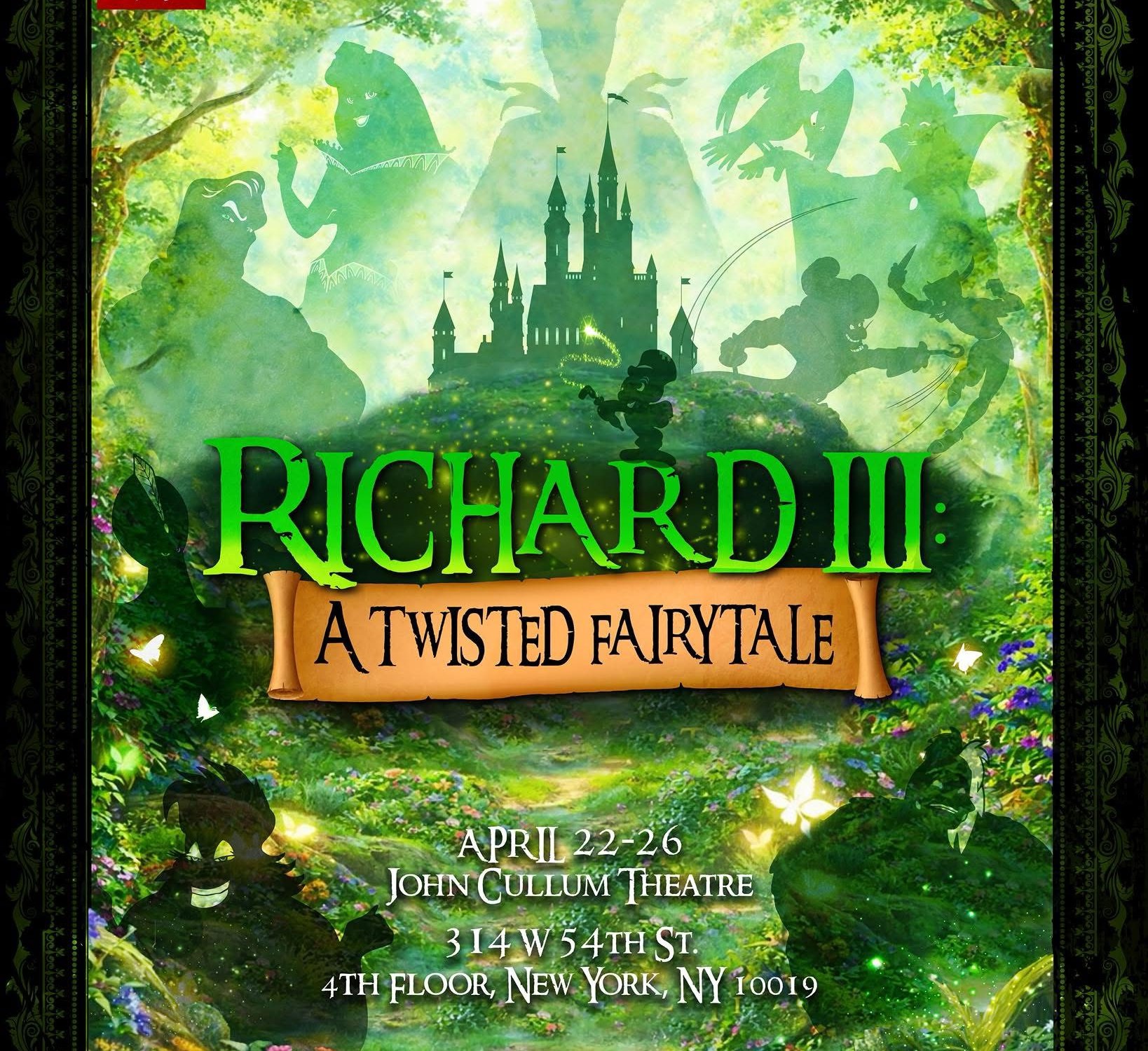
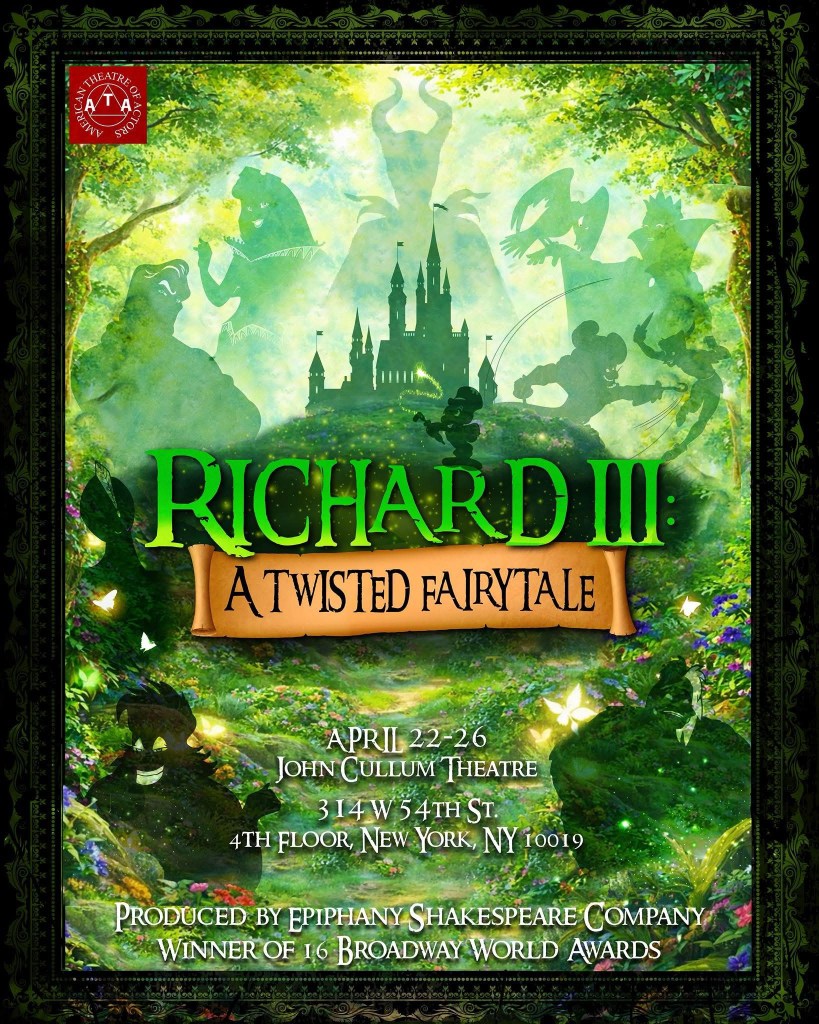
In the dark, neon-lit kingdom of Disneare, the lines between Shakespearean tragedy and pop-culture folklore don’t just blur—they collide. Epiphany Shakespeare Co.’s upcoming world premiere of Richard III: A Twisted Fairy Tale (running April 22–26 at the Cullum Theatre) promises a high-octane “epic mashup.” Yet, amidst the campy swordplay and enchanted spells, veteran actress Mikelle Terson is preparing to deliver a performance that serves as the production’s emotional and psychological anchor.

The Continuum of the Crown
While the pairing of a historical English queen and a fairy tale antagonist might seem like a study in opposites, Terson views them as two points on the same journey. To her, the “Evil Queen” is not a caricature of malice, but a woman trapped by the societal demand for external validation.
“The Evil Queen is a woman whose value is rooted in beauty, in being seen, in being ‘the fairest,’” Terson explains. “She’s the armor.”
In Terson’s interpretation, this “armor” represents the performative power women often adopt to survive in hostile environments—a theme that resonates deeply within the cutthroat court of Shakespeare’s Richard III.
Stripping Away the Artifice
The brilliance of Joshuah Patriarco’s script, according to Terson, lies in how it uses the “Twisted Fairy Tale” lens to explore the shattering of that armor. As the plot progresses and the body count rises, the heightened, campy theatricality of the Evil Queen must give way to the raw, grounded reality of Queen Elizabeth.
For Elizabeth, the loss of her children and the collapse of her world act as a brutal catalyst. “That kind of grief strips away artifice,” says Terson. “It forces a confrontation with what actually matters, and with who you are underneath all of that performance.”
The challenge for Terson lies in navigating this shift:
- The Early Phase: Heightened camp, competitive self-protection, and external power.
- The Transformation: A movement from “false, performative power” into a deeper, “authentic female agency.”
- The Result: A strength earned through loss and experience, capable of holding both immense grief and profound love.
A Collective Power
Ultimately, Terson sees her role as an exploration of how women move past the limits of external validation—be it beauty or status—to find an internal, earned strength.
Without spoiling the “happily never after” ending, Terson hints that the resolution of her character’s journey is symbolic of a larger, collective shift. It is a transition from isolation and competition into alliance—a transformation that allows the women of Disneare to confront the destructive forces around them.
“Even someone we might call ‘evil’ is still capable of deep feeling,” Terson notes. By finding the pain behind the “evil” persona, she aims to bring a sense of honesty to the stage that transcends the traditional boundaries of the genre.
Performance Details
See Mikelle Terson’s transformative performance in Richard III: A Twisted Fairy Tale:
- Dates: April 22–26, 2026
- Venue: Cullum Theatre (ATA), 314 W 54th St, New York, NY
- Tickets: $35.00 (+ fees) available at our.show/r3twisted
 Showtones