
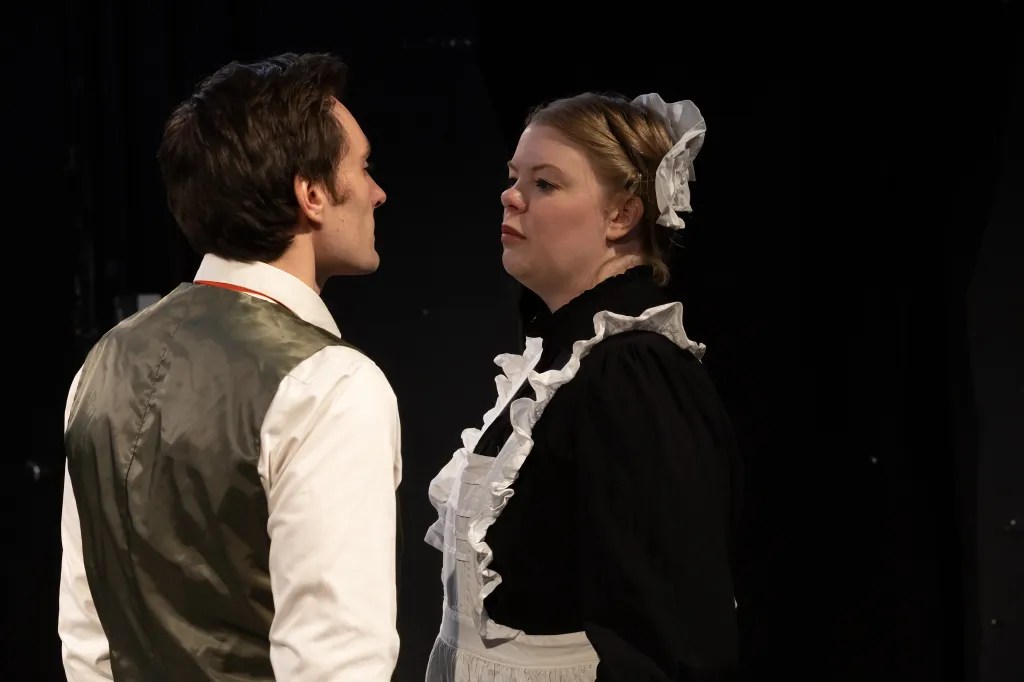
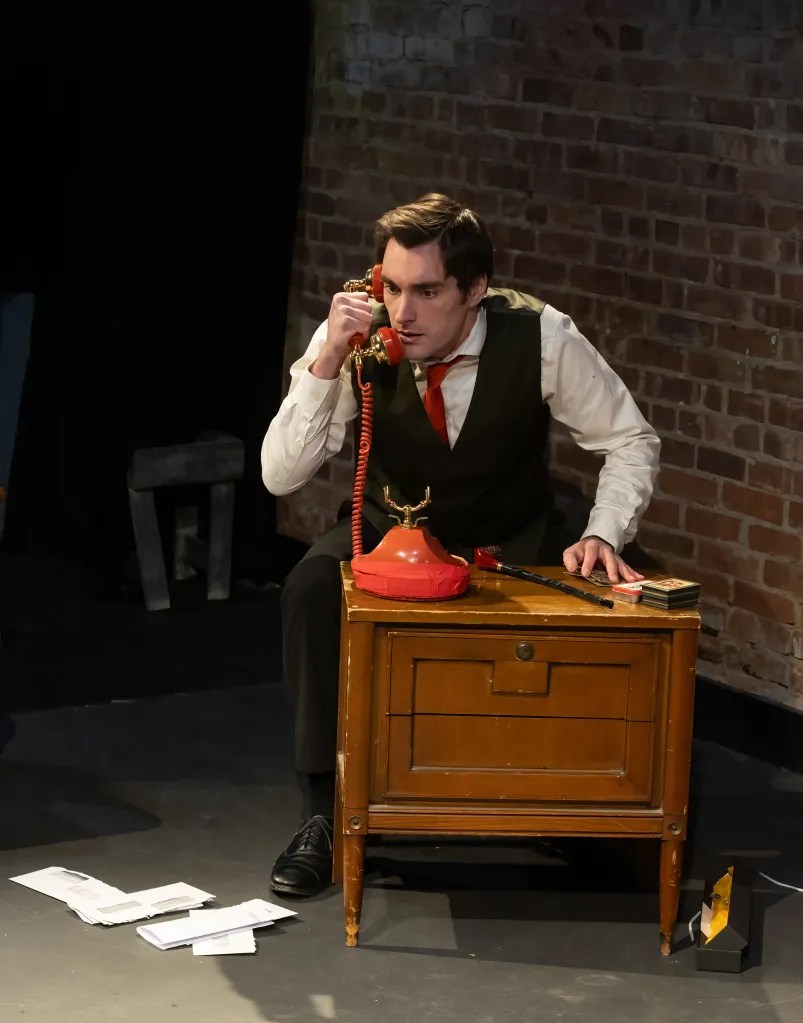
A Wife for Life and Reckless are part of a group of short plays that O’Neill wrote in 1913 shortly after getting out of a sanitorium he was in in 1912 for tuberculosis and his addiction. It is generally believed that only A Wife for Life (a ten-minute play) was produced during his lifetime and was the first O’Neill play to get a place on a stage. This understandable since Reckless is the far blacker work. Watching these shows reminded me of the ten-minute play festivals that can be found throughout the city, and which sometimes offer brilliant little gems.
John DeBenedetto and his group of actors, (Jonathan Beebe, Travis Bergmann, Natasha Saha, Emmy Potter and Paul Maurizio) gave the audience very solid productions of the two works. A Wife for Life was probably the earlier work and is about an older man who deserted a young wife to find his fortune, and she left him (and her young lover) while he was away. The older man sought revenge on the lover but finds that the lover was a better man than he is and he cannot bring himself to exact his revenge. The work is O’Neill before he has fully embraced the darkness that made O’Neill O’Neill.
Reckless is much more an O’Neill play. It is full of abuse, adultery, murder, and deceit and little humor. It has much more depth than A Wife for Life and leaves the audience on the edge of its seats as they wait for the next stone to drop.
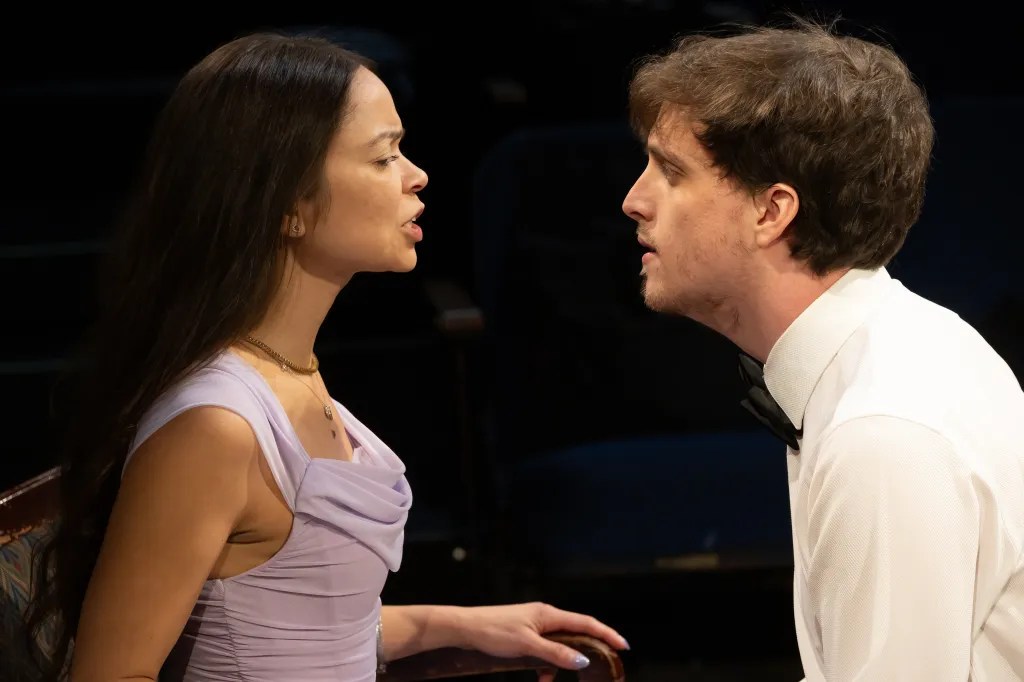



The problem that both of these productions have is the casting. The actors all do a fine job and DeBendetto’s direction is solid. But each of these plays call for an older actor playing the protagonist and, in the case of Reckless, a slightly older woman playing the nurse. Each of these actors are fairly young and their ages are not fully distinguishable on stage. This means a lot of the evil that O’Neill writes is missed in the production, since much of the jealously and plotting is driven by age differences. As a result, the audience does not get to experience these show as O’Neill intended.
 Showtones