
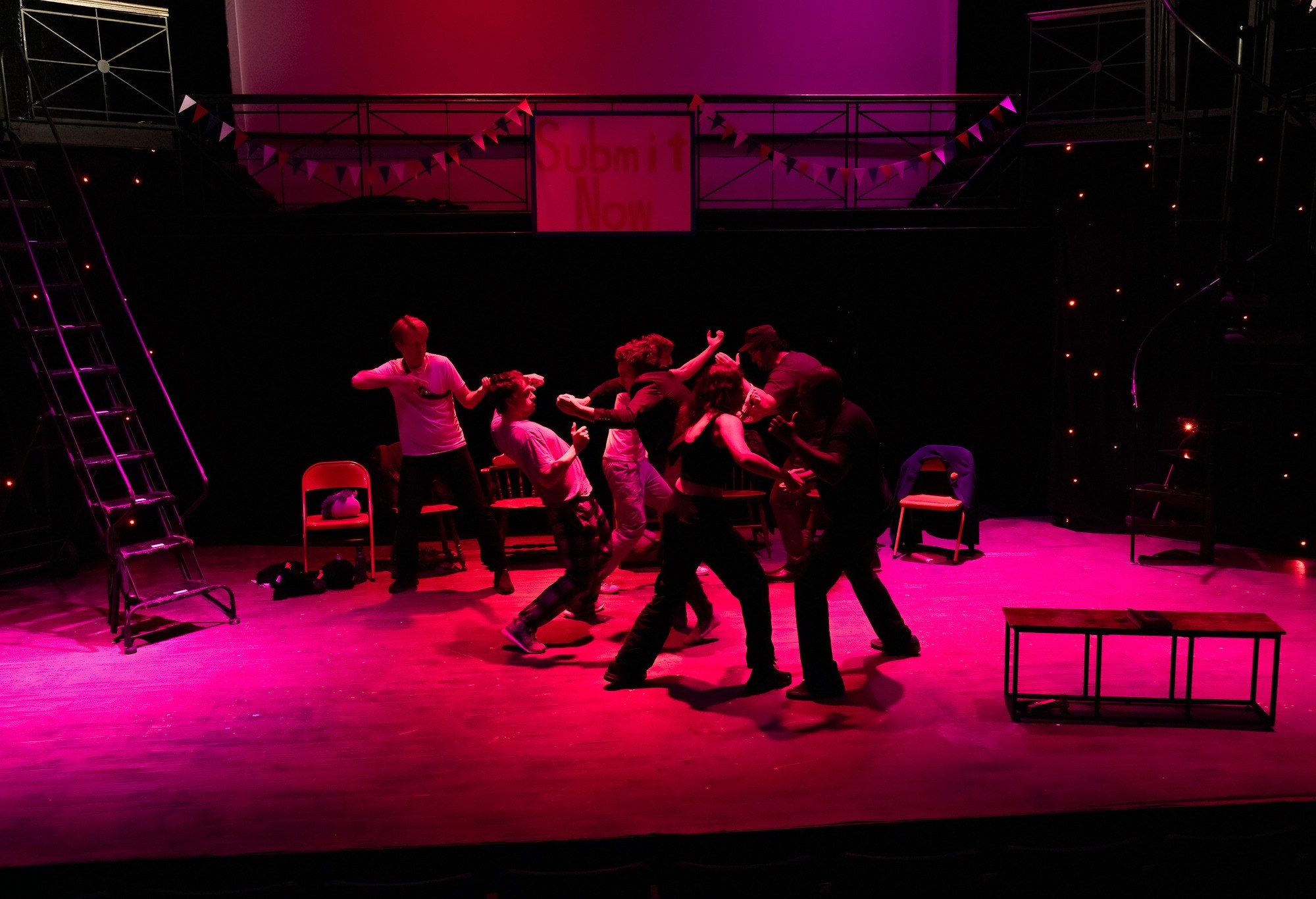
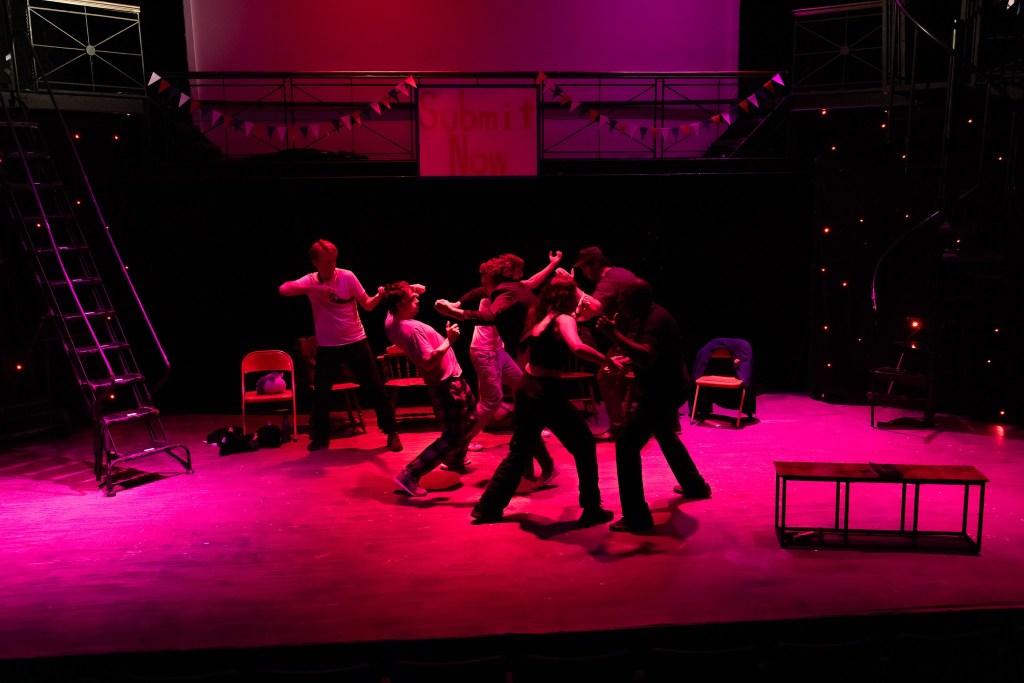
Bruce Lawder’s idea, setting a play about John Brown and his raid on the Armory at Harper’s Ferry in a mental health hospital, has potential, but only if the concept it fully embraced. That requires giving the patients the supervision they would be subject to and an acknowledgement that John Brown, despite the moral correctness of position regarding slavery, was, at minimum, a bit mentally unbalanced. Lawder fails to provide either of these “safe spaces” for his work.
The reason that Dan Lauria’s Just Another Day is so effective is because the “nurse” is omnipresent although never on stage. The show about two individuals suffering from Alzheimers who need to introduce themselves each day when they meet in the garden of a nursing home are constantly watched over by an off-stage nurse who makes her presence felt through a whistle she blows whenever there is a hint of “inappropriate” behavior or when recreation time is over. Lawder’s patients in Traitors, despite displaying severe and diverse forms of mental illness are, unrealistically, never supervised by hospital staff. Not only is this an oversight by Lawder, but it also means that the play lacks the structure that would have given an audience a sense of what Lawder is trying to achieve. A Psychiatrist periodically interrupting the “performance” to make corrections or refocus the “patients” would have made it clear that not only was Brown judged based on societal norms, but so are the patients. Instead, the patients are “self-regulating.” They remind each other of the need to participate and contribute to the group goals. It is a flight of fancy.
Lawder does give a relatively correct view of Brown. His goals and actions were “insane” and his chance of success nonexistent. What he only alludes to is that no one in the North initially supported his attack on the armory including abolitionists like William Lloyd Garrison. What turned Northern public opinion was the irrational actions of the Southern States who immediately mobilized their militias in response to what was a local and quickly contained “insurrection.” Lawder is correct when he asserts that Brown’s raid was the reason for the Civil War but not in the way he believes. The Southern reaction incensed Northerners and the next outrageous act by the South (the takeover of Fort Sumter) was viewed as requiring a quick and decisive response to Southern irrationality. Brown’s raid and more so the Southern response made the Civil War inevitable. Brown was a treasonous traitor, but so were the Southern governments who reacted with war-mongering fear to a minor event.
Traitors has major, but correctable, problems. The use of mental health patients to do a play about John Brown might work, but the current structure fails.
 Showtones