
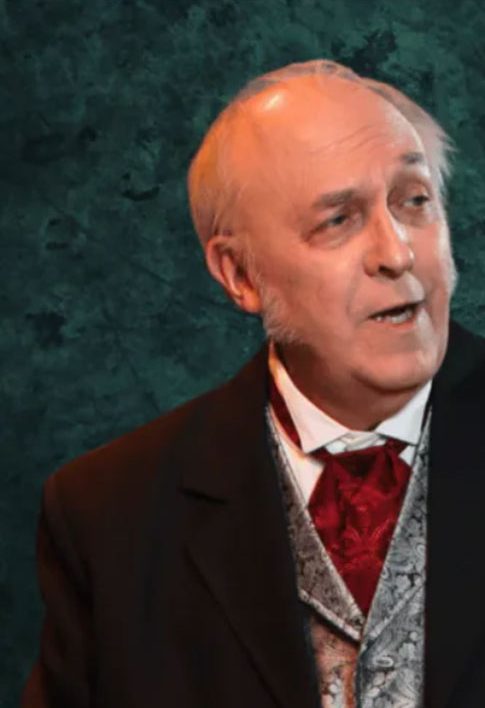
There is no question that Philip Paradis has provided audiences with a great service by staging his play Ralph Waldo Emerson: The Sage of Concord. Not so much because the play is particularly moving or because there is something new here, but because it gives us necessary insight into how late 19th and early 20th century writers made their living. That was by traveling from town to town reading from their books, essays and articles with an affordable admission fee. It is something that publicity shy writers should embrace today. It is still a way of making small chinks in the wall that blocks writers from becoming better known and, in the case of playwrights, getting produced.

Paradis does a fine job imagining what a typical 19th century talk/lecture would look like. He reads, for the most part, directly from Emerson’s works, which is what most of those paying for admission in 1871 would expect. Contemporary audience members though, without animation by Paradis, will have problems following all the arguments set out unless they have reviewed Emerson’s bibliography before attending. It is probably a big ask for many. That probably limits the audience that will fully appreciate this production, but, even without full appreciation, the opportunity to familiarize oneself with a significant means of self-promotion supplies lessons that many need to learn.
 Showtones