
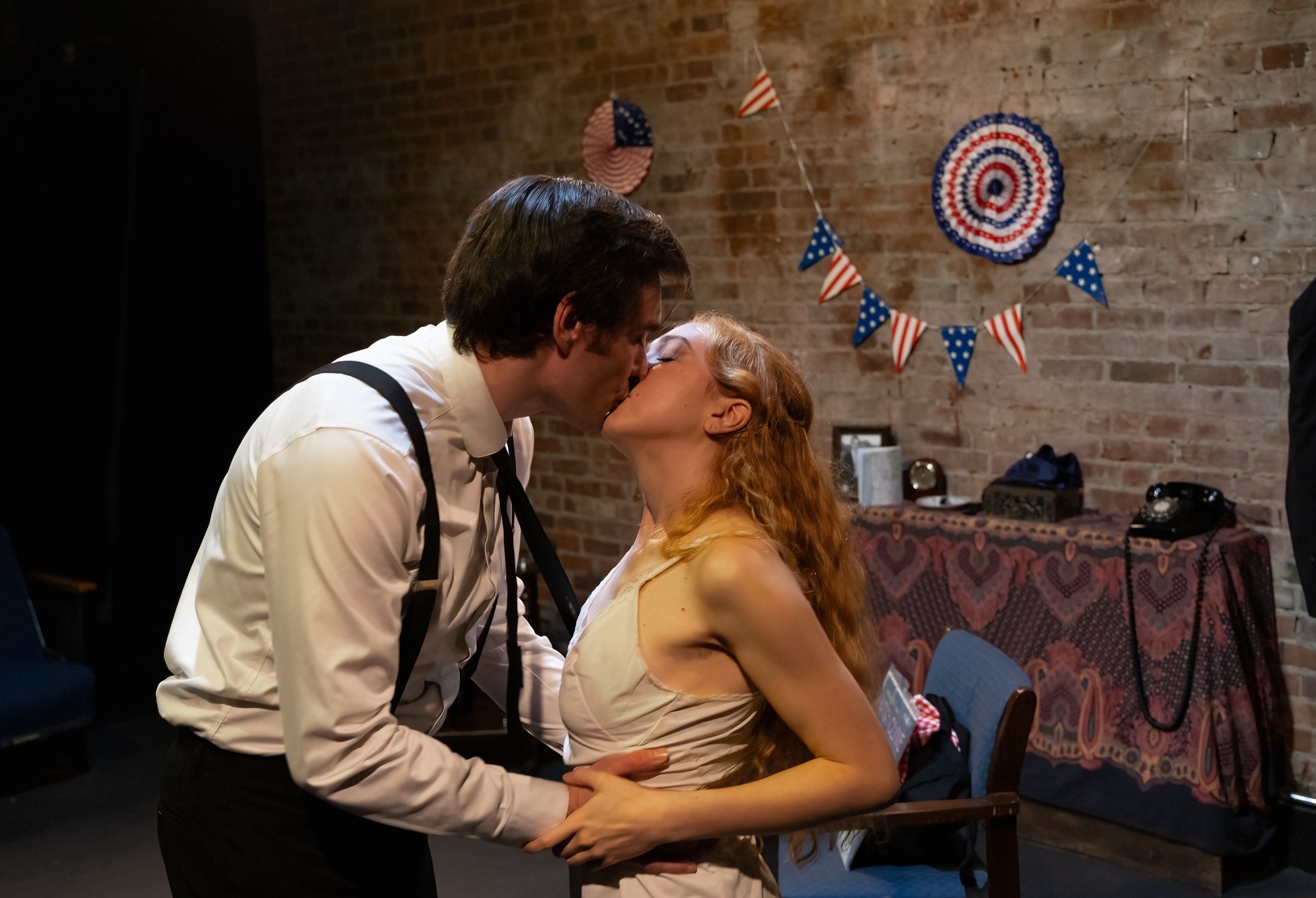
Sean Szak Prasso has accomplished two things that we seldom see from first time authors. He has written an excellent play and done an exceptional job in directing it himself.


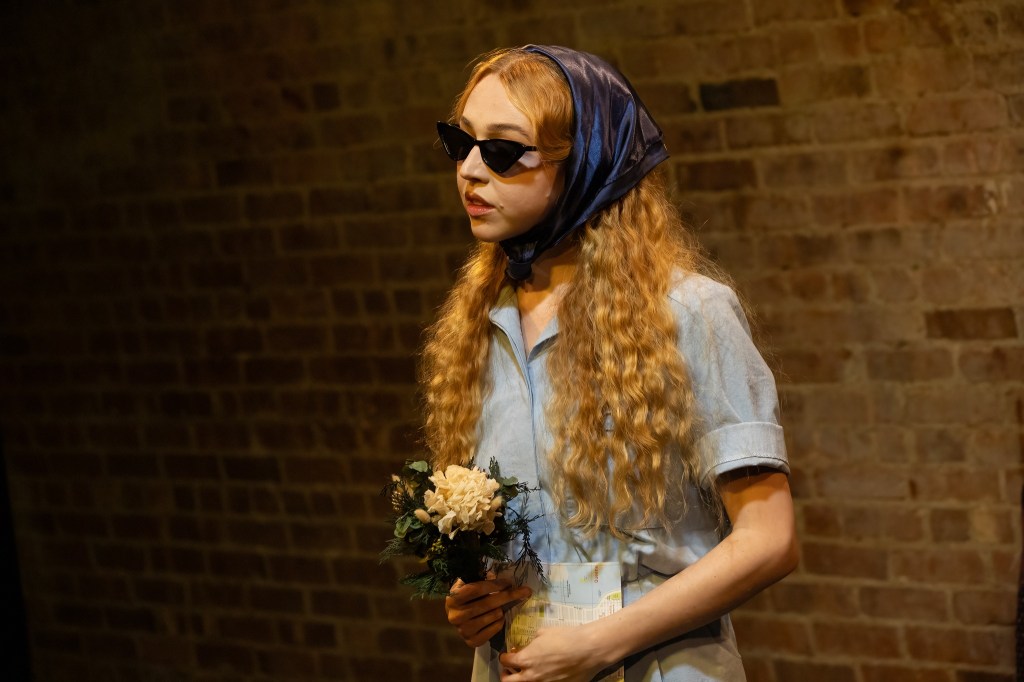

Angel in the Heat reminded me of Stephen Adly Guirgis’ Jesus Hopped the Train and that is a high complement. Prasso gives us four very damaged characters living in the not so deep South but embracing Southern values. Chase Colllins (Dustin Pazer) plays the guy from the wrong side of the track who was able to create a good life for himself but lost the girl in the process. He manipulates anyone around him to get his desired result. His sociopathic tendencies underlie his every action and word. Dixie Campbell (Annie Unger) plays the maybe psychopathic girl white trash girl who may have murder her male friend in self-defense (or maybe just because she wanted to see him die). She will stalk anyone to demand the attention she wants and will demand a high price if she doesn’t get it. Blake Jean (Travis Burgmann) is the overly handsome and charismatic narcissist from a proper family who believes the world revolves around him and his desires. Charlotte Jean (Amanda Stamm), the woman who knows how attractive she is and that she “deserves” to get everything she wants. Prasso, right from the opening curtain, lets these characters embrace who they are and give us the creeps as we slowly learn their character flaws.
Prasso keeps the pace slow, but never boring as each word and action has a purpose that moves the story steadily forward. The many scene changes are done with the type of aplomb that many veteran directors fail to demonstrate, and we anticipate, rather than wonder, what the next scene will be.
If there is a flaw in Angels, it is that after about 60 minutes we are anticipating an intermission, not because we are tired or bored, but because the play needs a “reset” before driving to a dramatic end. Unfortunately, Prasso, consciously or unconsciously, seems to believe that a play cannot hold an audience for more than 90 minutes, so we don’t get the intermission. He rushes to a conclusion when we wanted to be there and bask in the characters’ self-destruction for a little over 2 hours. This is worth seeing in its current state, but we hope Prasso goes back to his computer and lets us watch these characters truly and gruesomely self-destruct.
 Showtones